Enter the material at an angle instead of straight down. Less load on the bit at the moment it engages, and the bit lasts longer.
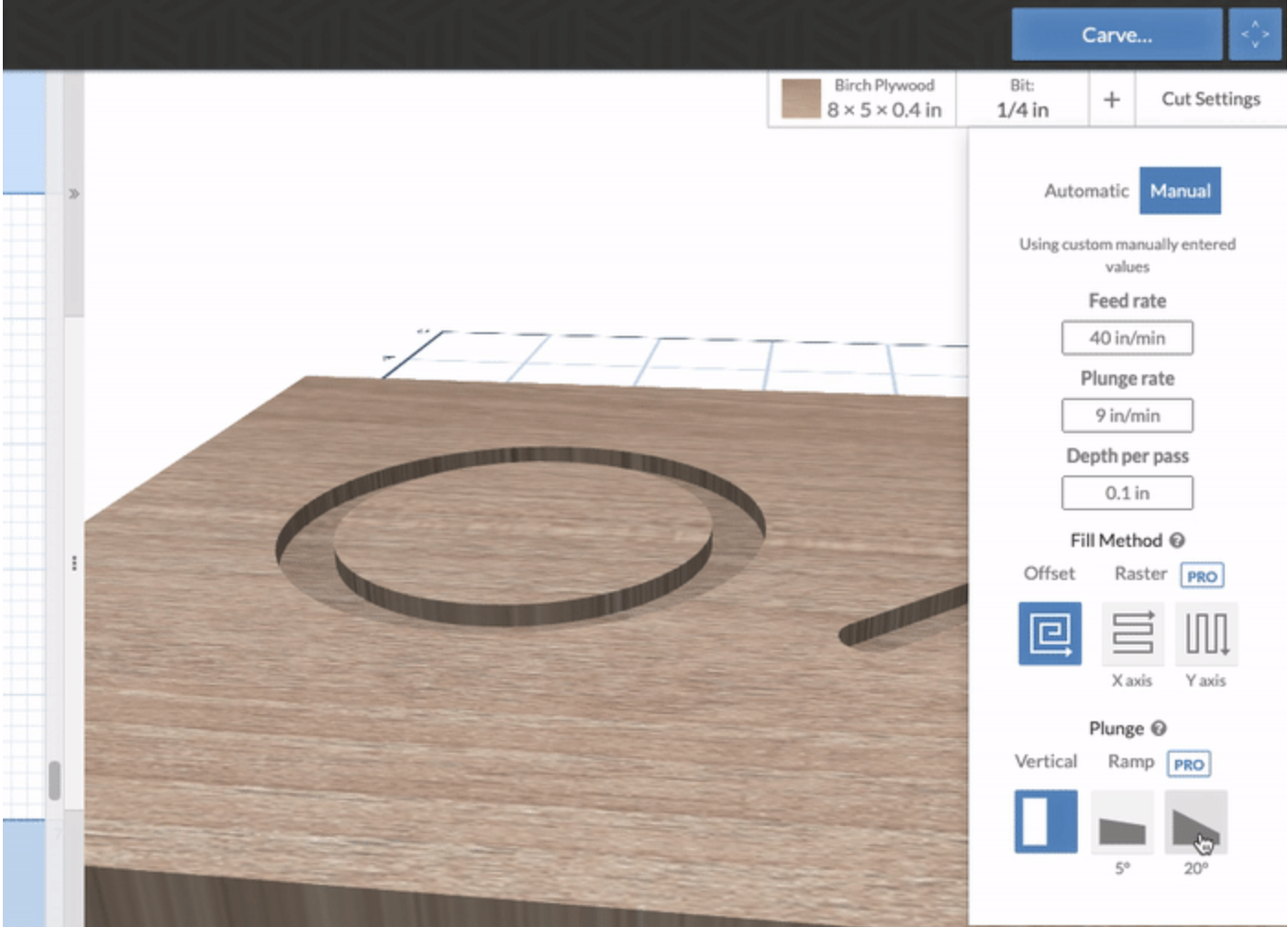
A straight plunge asks the bit to cut with its tip, straight down into solid material. The very center of an end mill is close to stationary, so it is scraping rather than cutting. That is where heat builds, where chips pack into the flutes, and where bits most often snap.
A ramping plunge descends along a shallow angle instead, so the bit is cutting with the side of its flutes the whole way in. The load arrives gradually, the chips have somewhere to go, and the bit reaches full depth without ever having been asked to drill.
You feel the difference most in hardwood, in acrylic and in aluminium, and on any job with a lot of separate pockets where the bit has to plunge over and over again.
Create a free Easel account today, or start a free trial to unlock every Starter and Pro feature.
Easel Pro Trial →
