Make a wooden tic-tac-toe board

Play with carved X and O tiles, wooden pegs or painted seasonal pieces. Find real maker builds and shared designs, then watch a board take shape in Easel.

Explore the game boards

Start from a blank workpiece

Draw nine playing pockets and a matching round token

Start with a new blank workpiece in the real Easel editor. Resize a square to a six-inch board and set an outside outline cut. Add nine 1½-inch squares in three rows and give them shallow 1/8-inch pocket cuts. Draw a separate 1.3-inch round token, smaller than its playing pocket. The native 3D preview shows the board and token outline. This unsaved design uses half-inch stock and demonstrates the layout, not a tested carve or a complete game set. For your playing pieces, choose thinner stock that leaves enough height above the pockets to lift them out. Make two distinct groups of tokens, and check the fit before carving all of them.

Recorded in the Easel editor, playing at 3× real speed.

Choose shaped pieces, square tiles or wooden pegs

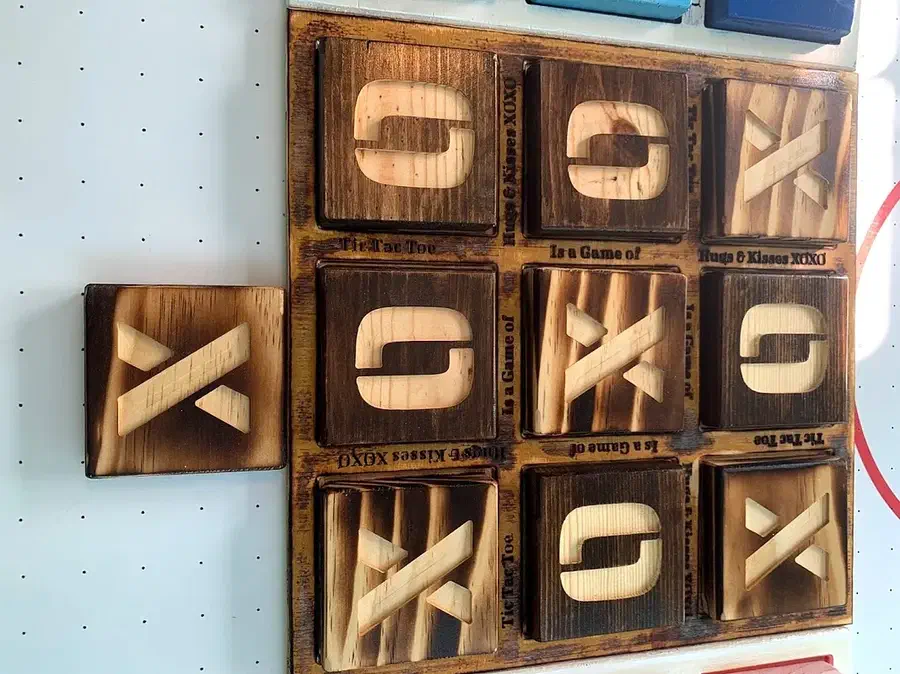
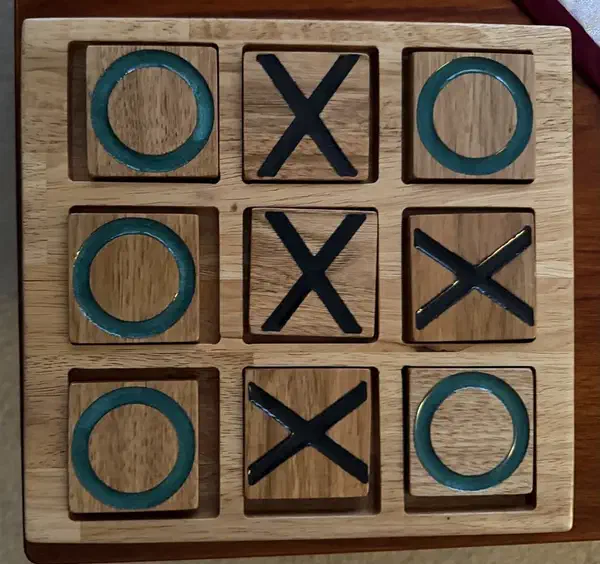
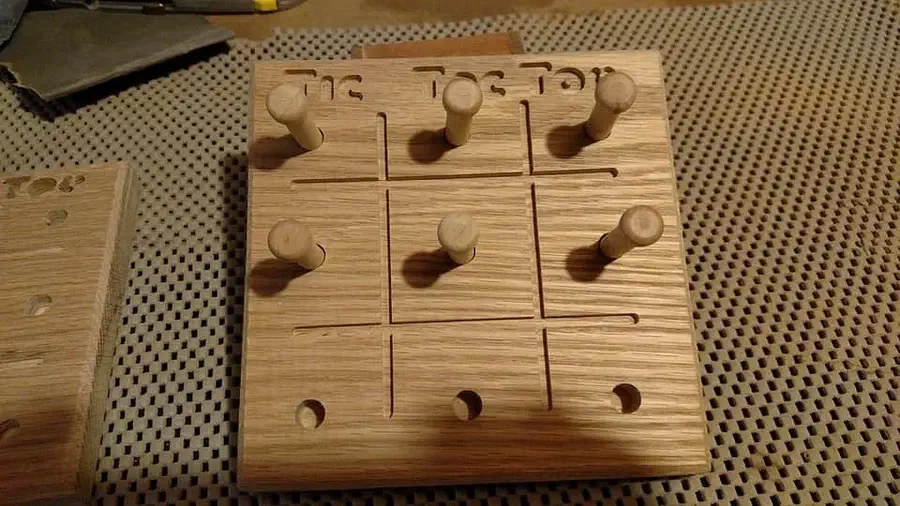
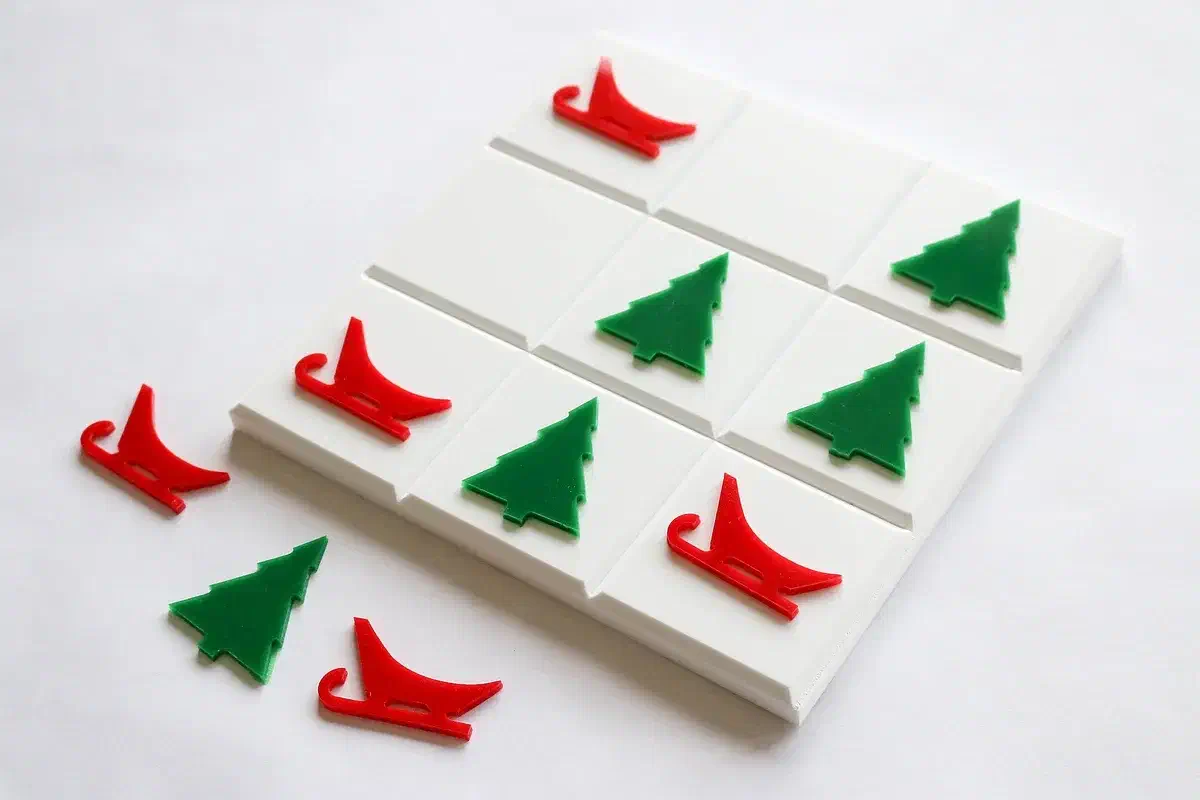
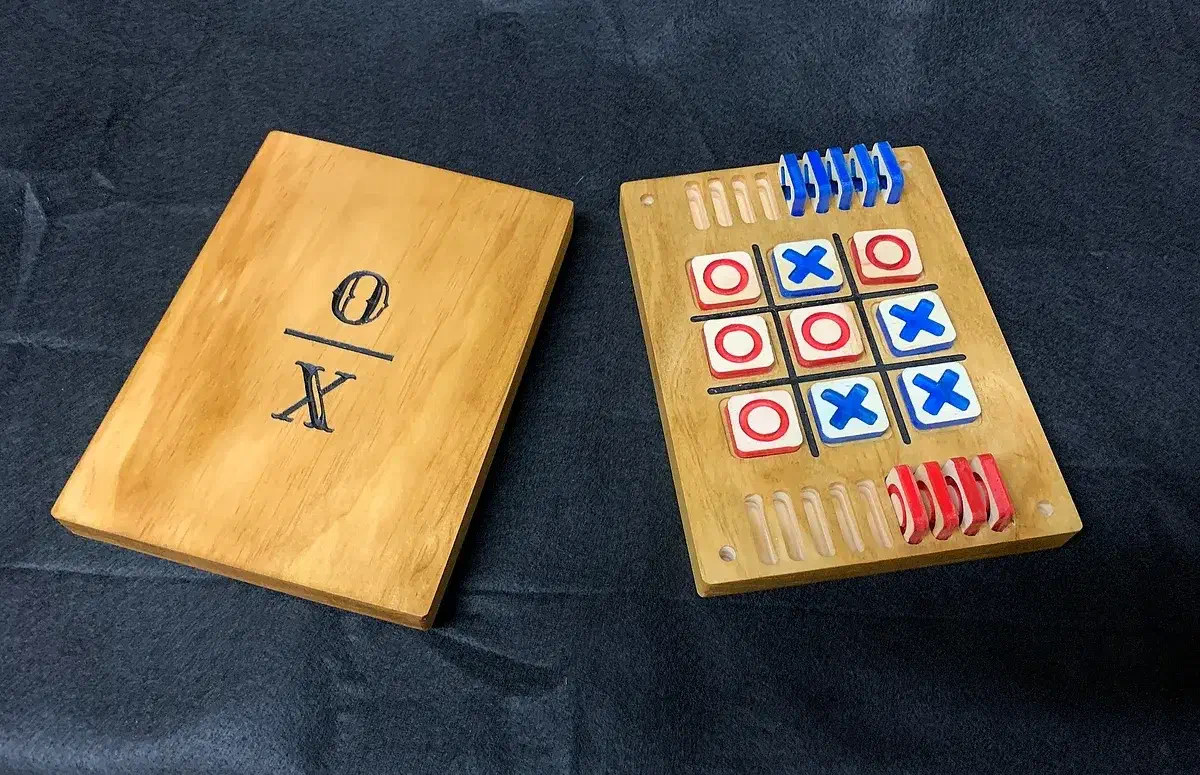
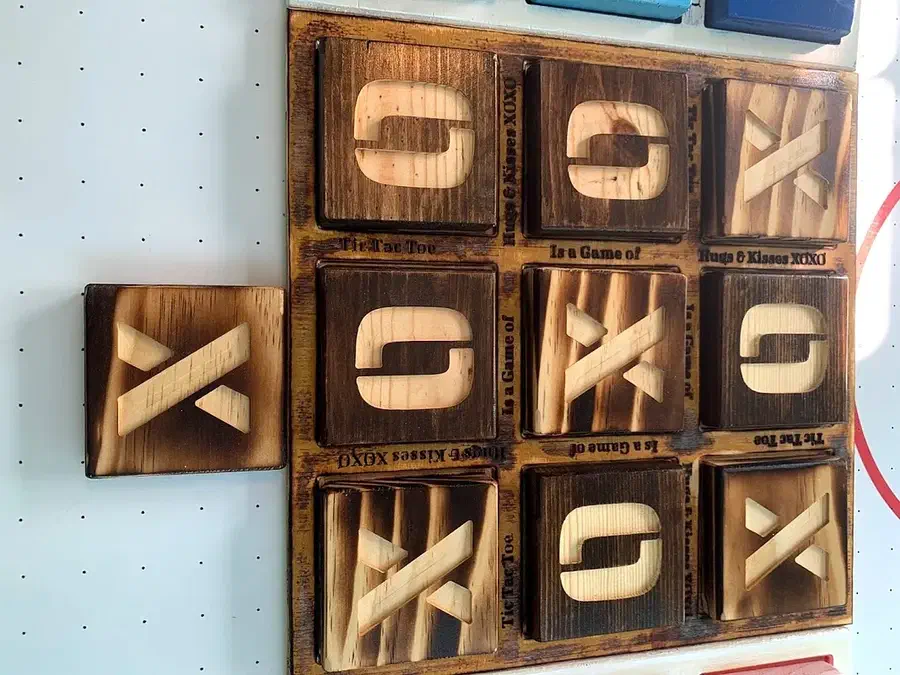
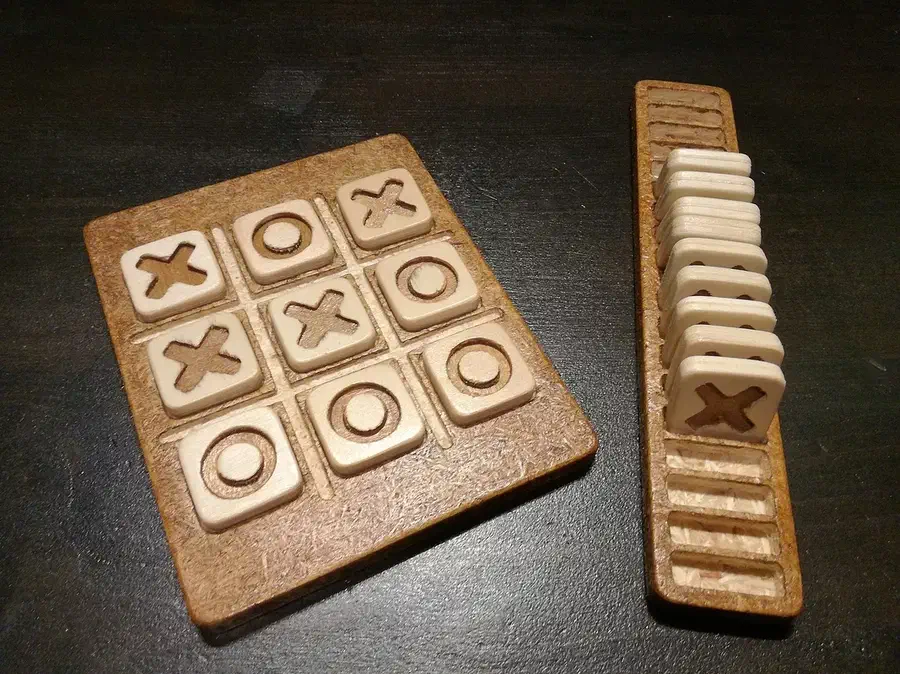
A board can stay on the table or pack away with its pieces. These makers use different sizes, materials and storage arrangements. Shared designs supply the carved shapes; fitting, painting, resin work and bought hardware vary by build. These are maker examples, not age-graded or safety-tested toy plans.

See more tic-tac-toe projects in gallery search →

From makers’ notes and discussion

Close the lid and fit the playing pieces

Read the discussions without an account. Log in to post a question; replies are not guaranteed.

Use small magnets for a lift-off lid

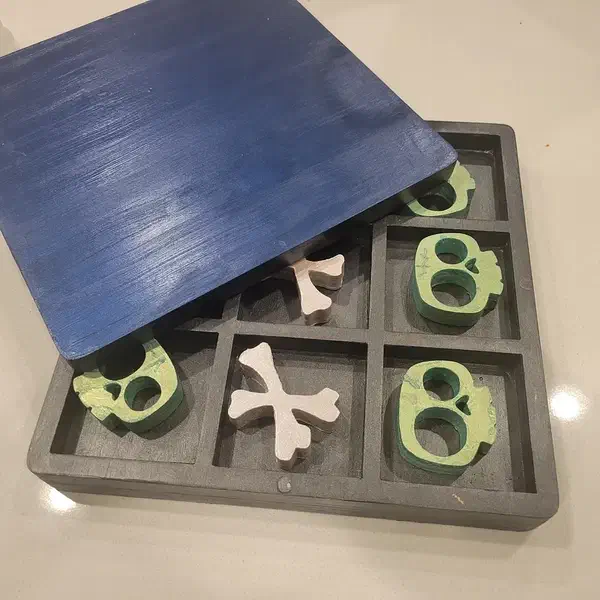
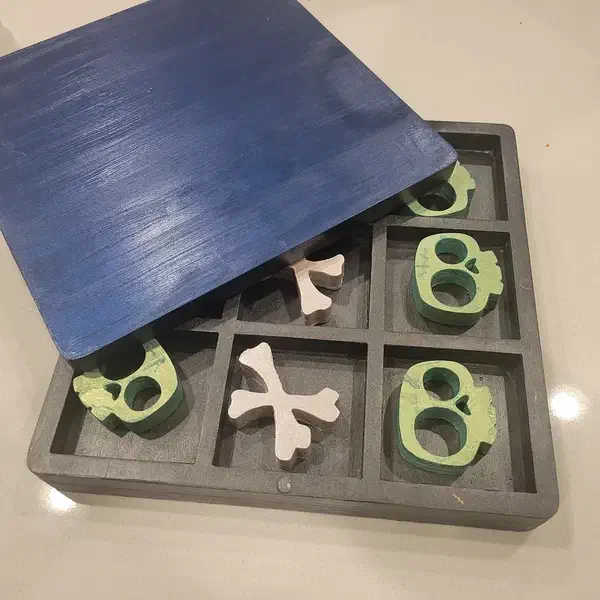
Javier Ochoa specifies 6 mm rare-earth magnets as an alternative to latches and hinges. This keeps the lid separate from the board rather than swinging it open. Plan matching magnet positions in both parts, and keep the magnets securely enclosed in the finished piece. Measure your actual magnets before choosing the recess diameter and depth.

Project notes by Javier Ochoa: read the source.

From Cross Bone Tic Tac Toe 8in by Javier Ochoa.

Ask a question

Fit sharp X corners to rounded pockets

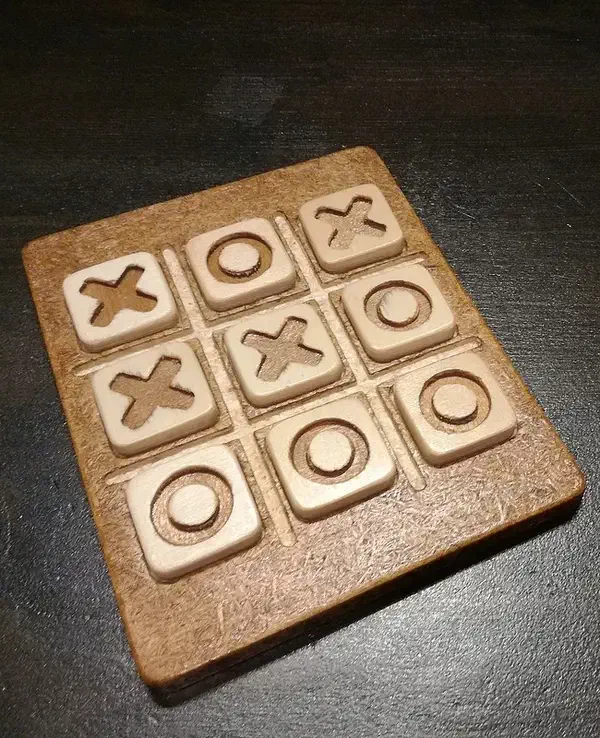
A round cutter leaves rounded inside corners. In his project discussion, Rex Hickey explains that the points of his X pieces need sanding to fit those pockets, and that tight tolerances can require a little more fitting. Make one pocket and one piece first, then check the fit before cutting the whole set or applying the final finish.

Comment by Rex Hickey: read the source.

From Tic tac toe on the go by Rex Hickey.

Ask a question

Fit the pieces to nine playing spaces

Pair an X with a sample pocket before laying out the full board. For a travel set, leave storage room for all the loose pieces beneath the lid.