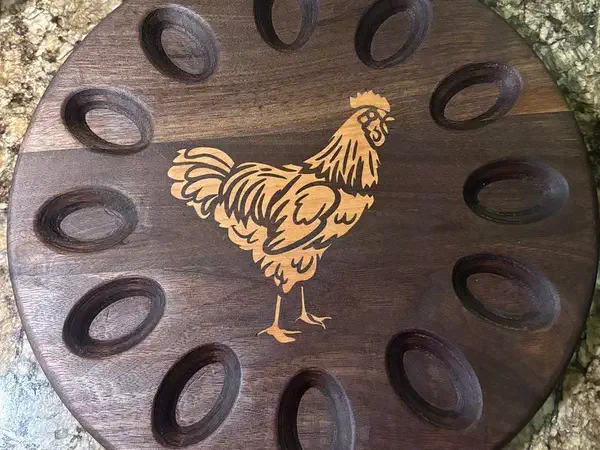
Make an egg tray for your kitchen

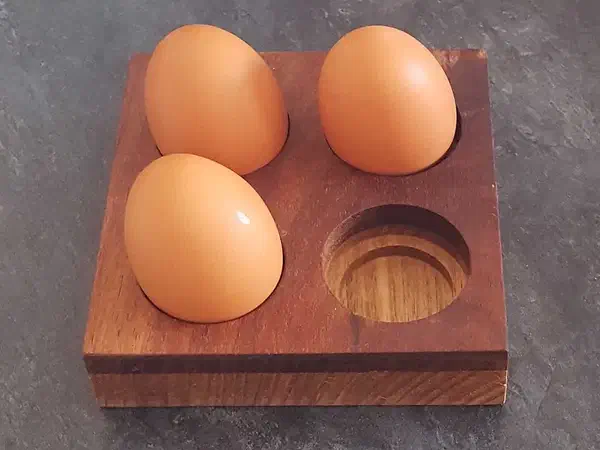
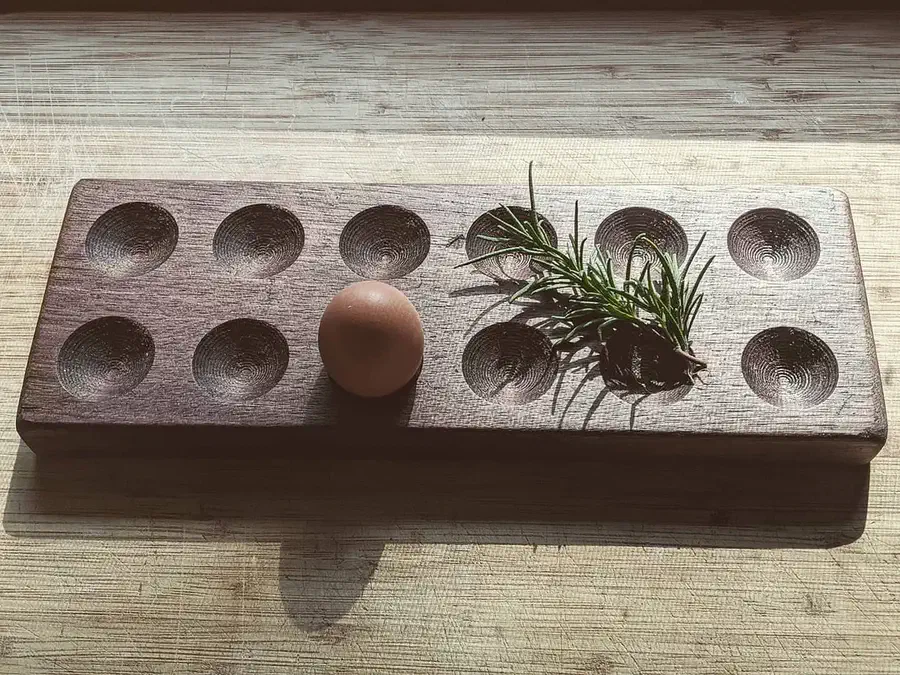
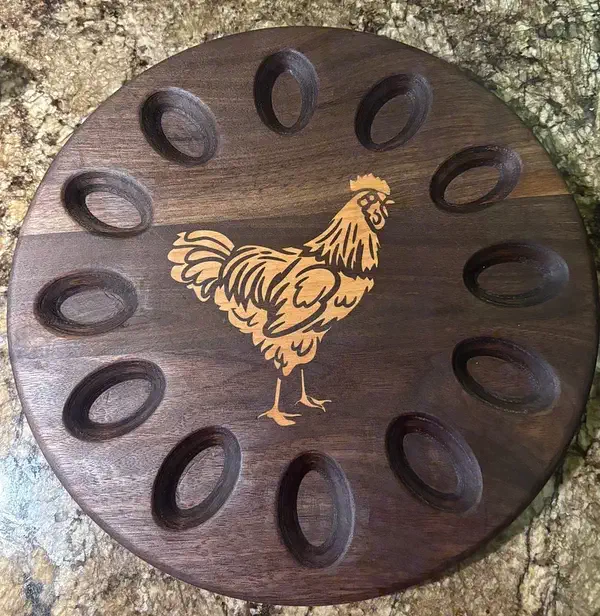
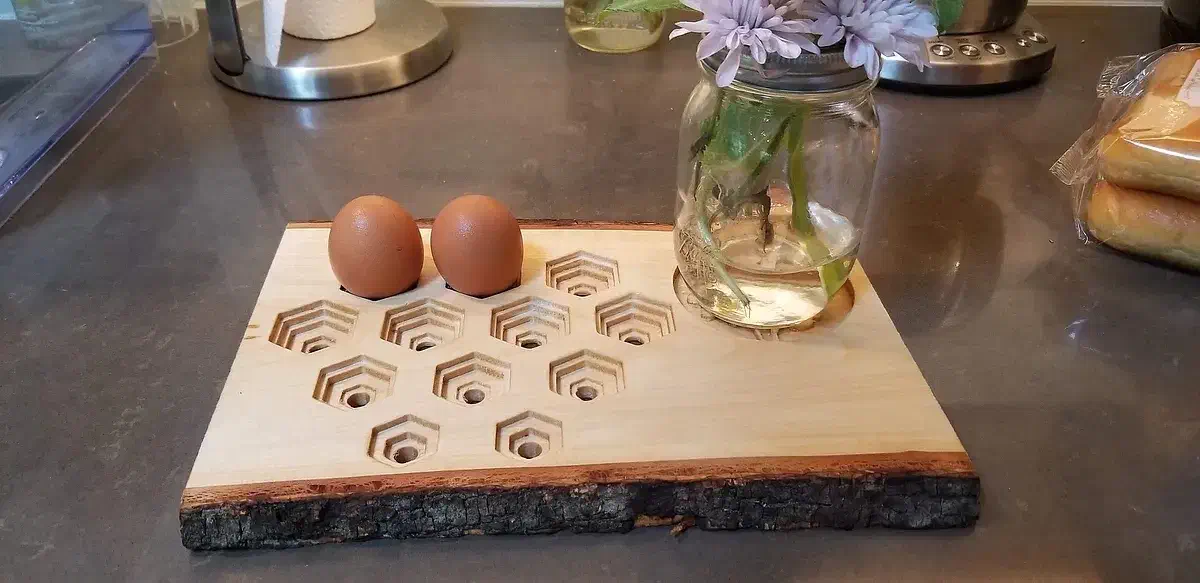
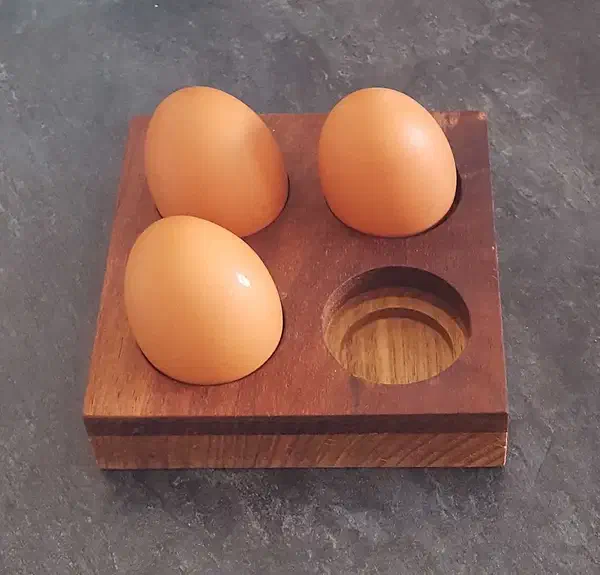
Choose a small four-egg holder, a live-edge tray or a round serving layout. Explore the makers’ shared designs, then watch a six-seat wooden tray take shape in Easel.

Explore the egg trays

Start from a blank workpiece

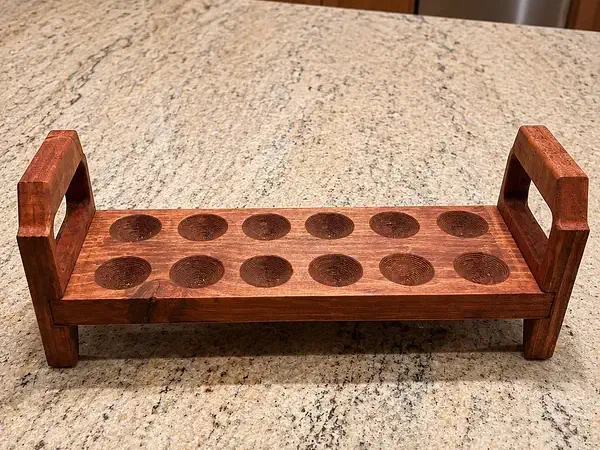
Draw six egg recesses inside a wooden tray

Start with a blank workpiece in 3/4 inch stock. Draw a 10 × 5 inch tray outline, then place two rows of three 1 1/2 inch circular recesses. Set each recess 1/4 inch deep, leaving 1/2 inch of wood underneath. The recording shows this basic flat-bottom layout in the native editor. Test one recess with the eggs you intend to hold before cutting all six; it is a starting layout, not a fitted bowl profile.

Recorded in the Easel editor, playing at 3× real speed.

The recording uses a temporary guest workpiece, not a saved download or a physically carved tray. Round flat-bottom recesses differ from the stepped bowl-shaped seats in several shared designs.

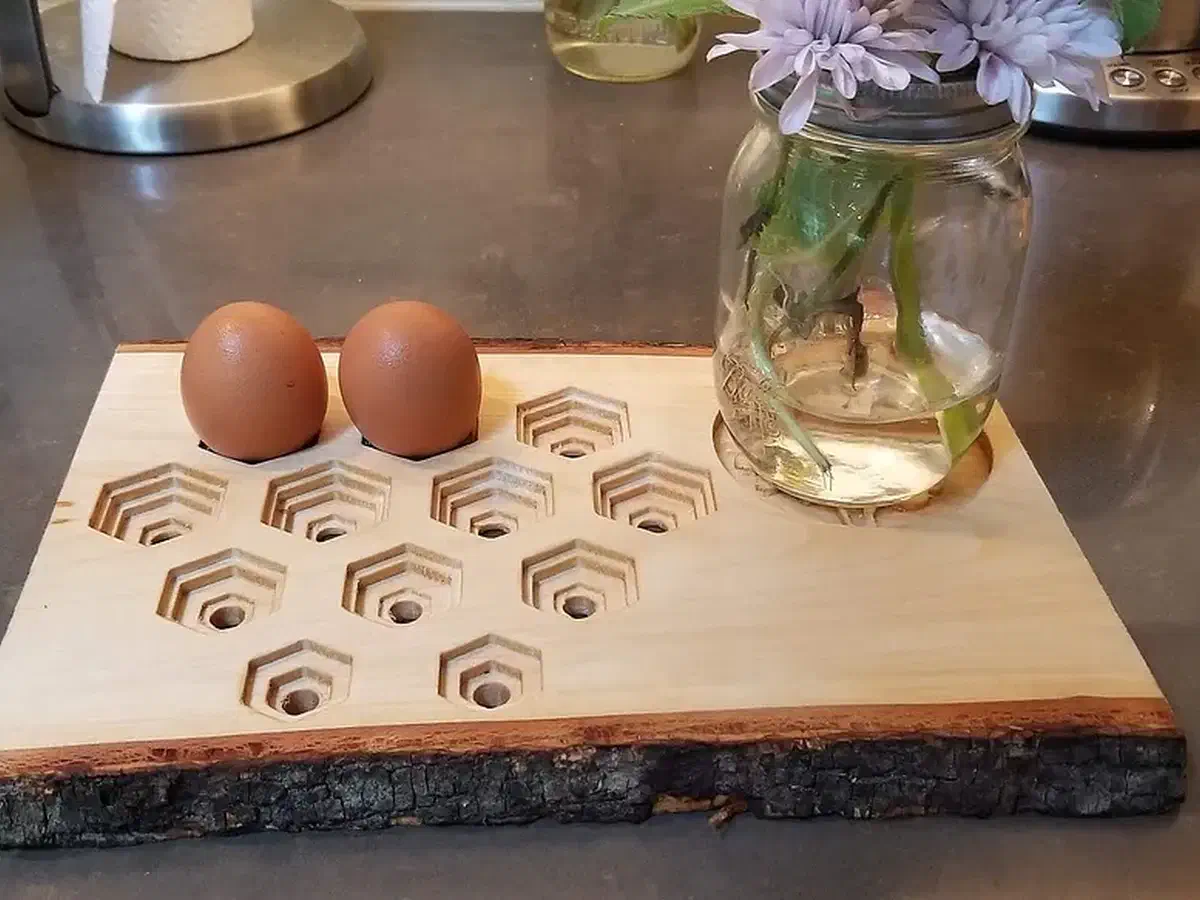
Try a live edge, an inlay or an open honeycomb

These makers use different stock and different ways to support eggs. Choose the construction you want, then use the shared file scope described beside each build.

See more egg projects in gallery search →

From maker notes and discussion

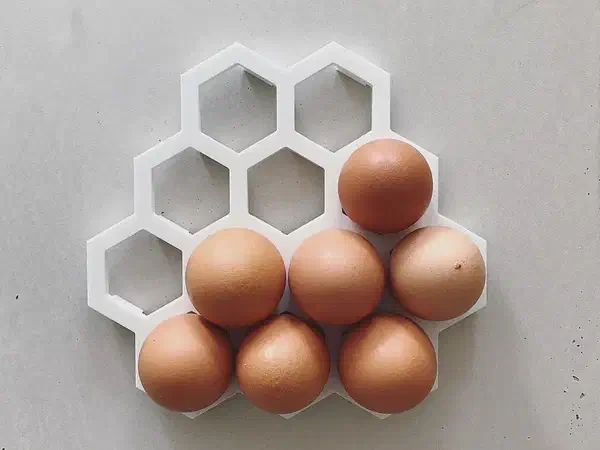
Keep egg-sized cells and support the honeycomb cutouts

Use the honeycomb project’s discussion to ask about cell sizing or holding tabs. Posting requires login; makers may not reply.

Resizing a honeycomb changes whether eggs fit

Johnson explains that his honeycomb can be reduced for narrower lumber, but smaller cells can lose the egg-holding function. Choose the cell size around your eggs first, then decide how many cells fit the board. Reducing the entire drawing changes both the outline and the openings.

Project notes by Joseph Johnson: read the source.

From Honeycomb Egg Trivet by Joseph Johnson.

Ask a question

Add support tabs where long-grain cutouts can break loose

In his honeycomb instructions, Johnson recommends three holding tabs per cutout after finding that two allowed pieces to break away in long-grain areas. Plan the tabs around each small cutout, not just around the outside of the tray. Remove the tabs and smooth the edges after carving.

Project notes by Joseph Johnson: read the source.

From Honeycomb Egg Trivet by Joseph Johnson.

Ask a question

Choose the egg layout you want to carve

Start with four recesses for a compact tray, or use a ring to leave room for a center engraving. Keep enough wood beneath shallow seats and enough space between eggs to lift them out.