The animation below shows drawing a round Christmas ornament from scratch in Easel. It uses thin birch plywood, as in Richmond Cox’s angel ornaments, and a separate thread loop passes through a small hole near the top.
Creating an Easel account is free. No credit card required.
First draw a 3-inch circle on the blank workpiece and choose an outside cut through the example ⅛-inch stock.
Add a 3/16-inch through hole on the centerline near the top, leaving wood above it to carry the hanging loop. The recording places its center 0.456 inches below the outer top edge.
Cut and smooth the disc, then add paint or a name and thread the loop through the hole. This recording makes a plain ornament blank, not the angel artwork or assembled drum. Its dimensions are design assumptions, not a tested carve.
Hang an angel, build a drum or arrange a mantel village
Flat cutouts and stacked pieces make different decorations. Thread, glue, paint and hanging hardware are separate supplies; the shared Easel files provide the wooden shapes.
Richmond Cox’s angel is a thin birch-plywood cutout with a hanging hole and patterned skirt. Its shared design contains the angel paths. The maker specifies 3 mm birch ply; add the hanging thread after cutting.
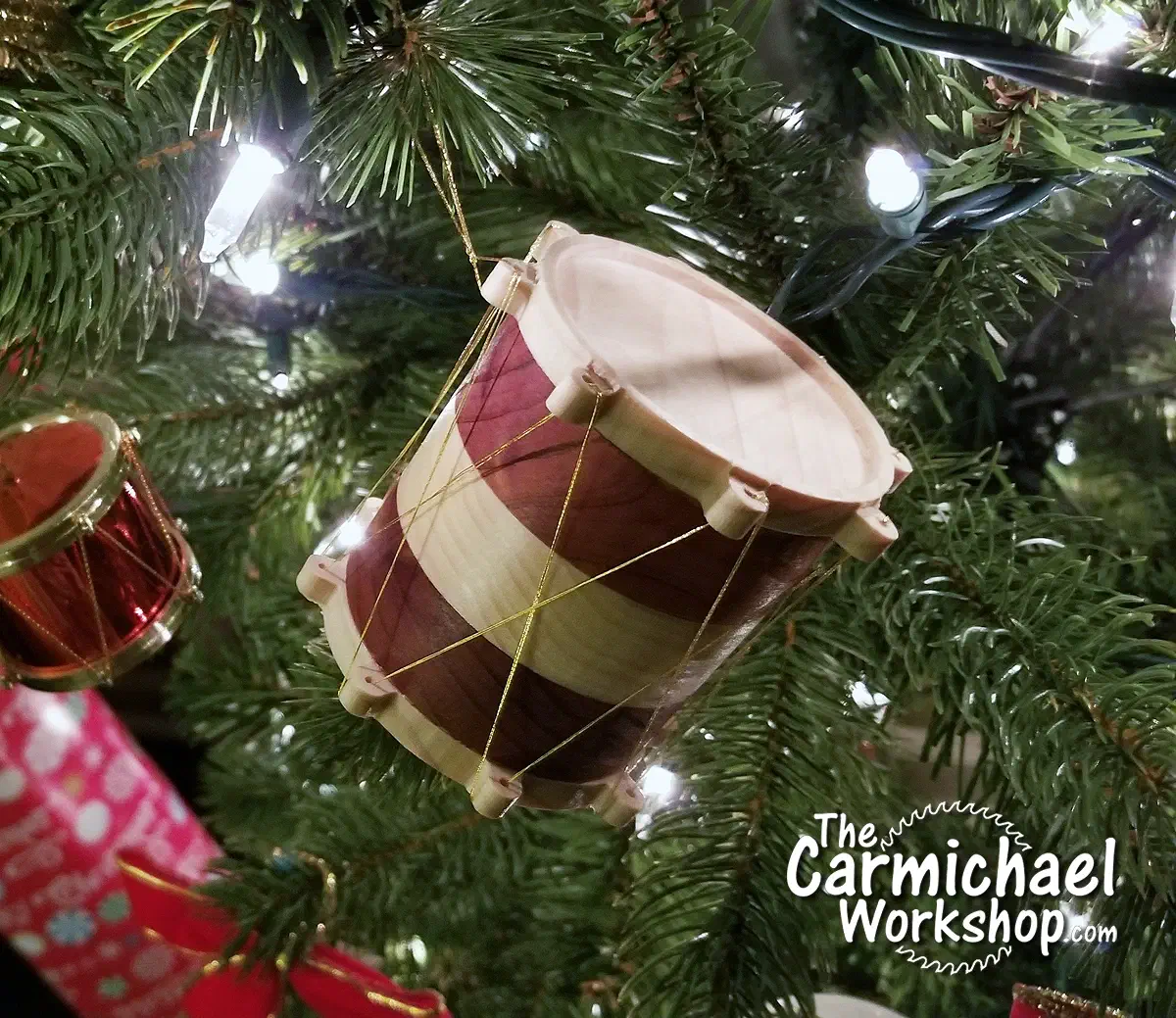
Steve Carmichael used poplar and red cedar for this miniature drum. The native layouts supply circular body and rim pieces; three thicker body layers are glued between thinner rims. Gold thread, glue and finish are additional supplies. His written materials differ from the gallery’s stock tags.
Amanda Lynn Hendrix’s pine village stands as a row of simple white house silhouettes. Three loaded workpieces contain the building layouts. The photographed paint, greenery and mantel display are not supplied by the Easel file.
Creating an Easel account is free. No credit card required.
From the makers’ notes and instructions
Seal fine plywood before cutting
Read the public project discussion; log in to add a comment.
Keep the angel’s thin details together
In Christmas Angel’s, Richmond Cox says to apply sanding sealer before cutting to keep the fibres tight. His instructions pair that preparation with 3 mm birch plywood and a 1 mm cutter.


 A birch-plywood angelby Richmond Cox