Make a centerline-marking tool

Design a pencil guide in Easel with a center hole halfway between two pin holes. Change the body length and pin spacing for the boards you want to mark.

See the finished tools

Start from a blank workpiece

Put the pencil exactly between the two pins

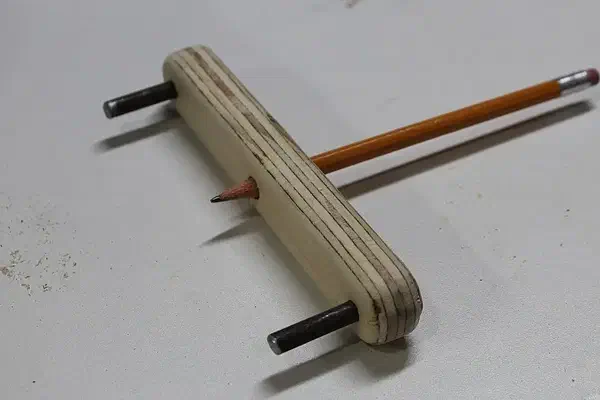
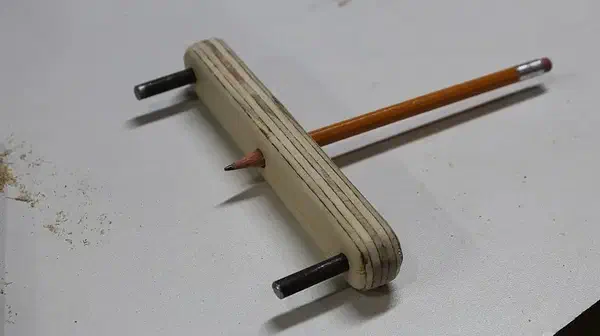
Make a plywood marking-tool body, with two separate dowels or steel pins and a pencil added after carving. Paul J. Bennett’s plywood tool shows how these parts fit together. First draw a 6 × 1-inch rectangle in Easel. Add two ¼-inch pin holes with their centers 5 inches apart, then a 5/16-inch pencil hole exactly halfway between them. Keep all three centers on the same line. The recording uses ¾-inch plywood and through-depth holes and an outside cut around the body. Match the thickness to your sheet, remove the holding tabs and sand the body after carving. Fit the pins so they project from the same face; rotate the tool until they touch opposite board edges, then move it along the board with the pencil in the middle. Check pin and pencil fit on scrap before cutting the body; this is a design demonstration, not a physically tested tool.

Recorded in the Easel editor, playing at 1× real speed.

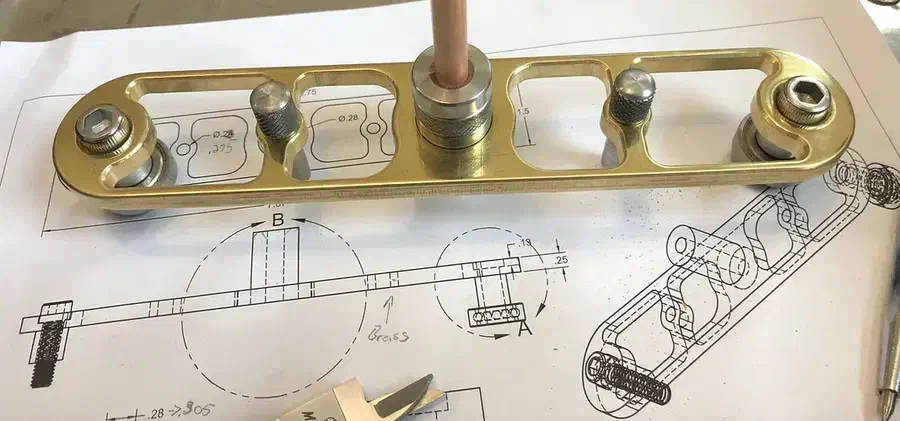
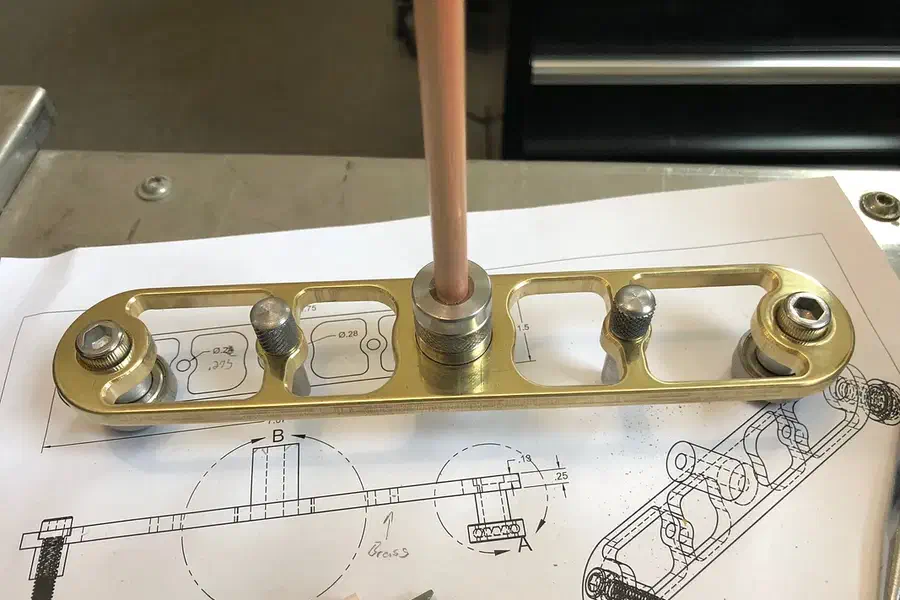
A plywood shop tool and a brass gift

Both tools put a pencil between two end pins. The plywood example has editable Easel shapes and assembly instructions; the brass example opens an imported machining pass rather than a body you can resize in Easel.

See more centerline search results →

Cut the pins separately from the body

Log in to post a question in the project discussion; replies are not guaranteed.

Use two short dowels or lengths of round bar

Paul J. Bennett’s finishing instructions specify two 1½-inch lengths of ¼-inch wood dowel or steel round bar for the end holes. The pencil goes through the center hole when the tool is ready to use.

Project notes by Paul J. Bennett: read the source.

From Centerline Marking Tool by Paul J. Bennett.

Ask a question

Set the pin spacing for your boards

Keep the pencil midway between equal-sized pins as you change the spacing. The pins must reach opposite edges of the board while the pencil touches its face.